US History--Civil War & Reconstruction--2008


My units change every time I cycle through them. (I like to think the units are getting better each time.) For our most recent study of the Civil War, I had students in grades one through ten. Our main assignment was this:
Make a FLAP BOOK with some information about each of the following:
--Slavery
--Abraham Lincoln
--A Civil War battle
--A Confederate leader
--A Union leader
--Reconstruction
Also, add something from at least two other topics—medicine, photography, constitutional issues, famous ships, movie reviews, timeline, or any additional from the list above.
I didn't direct the construction of the Flap Books. We spent most of our “togetherness school” time reading aloud, watching movies, or doing activities. Then the Flap Books were each student’s synthesis of all the information.

Some of our other activities included making a map showing Union & Confederate states, adding to our timelines/century books, contrasting industrial North with agricultural South, memorizing the Gettysburg address, and making a chart of major battles of the war.

There are so many great resources for Civil War times!  This time around I used the following:
  • Sojourner Truth:  Ain't I a Woman? by Patricia C. and Fredric McKissak.  
  • Runaway to Freedom by Barbara Smucker--about the Underground Railroad.
  • Gods and Generals--video version of the book by Jeff Shaara.  This covers the Civil War before Gettysburg, with a lot about Stonewall Jackson.
  • Voices from the Civil War by Milton Meltzer.  This author has a series of books on U.S. history using all primary sources.  It's a great resource.
  • video:  Robert E. Lee from the History channel.  (We didn't think it was very good, so I'd like to find a different video or book about General Lee.)
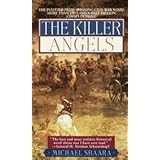
  • Killer Angels by Michael Shaara.  This historical novel about the battle of Gettysburg is one of my favorites.  It introduces the reader to people on both sides of the war, so you feel that you know them as friends.
  • Just a Few Words, Mr. Lincoln by Jean Fritz--about the Gettysburg address
  • video:  Shenandoah
  • "A Lincoln Preface" by Carl Sandburg (part of his famous Lincoln biography)
  • Critical Thinking in US History, volume 3, lesson 6.  This lesson explores corruption in the Reconstruction governments.
I recommend that you find additional books—especially biographies of other people from that era (Clara Barton, Matthew Brady, Frederick Douglass, George Washington Carver, Eli Whitney, etc.)  Let me know what gems you find!

Whole to Parts

I’ve really been thinking about this post, since Tori requested it. (Thanks for the nudge!) It’s one thing to know the definition of “whole-to-parts learning” and another thing to apply it. That’s why I didn’t consciously apply it for long after I was first exposed to the idea. And why I discovered I was actually teaching whole to parts in some cases, but didn’t know it. So, I will explain the idea as I understand it, and then try to give lots of examples of applications.
In whole-to-parts learning, instruction begins with the “big picture,” or in a natural setting. Then learners construct their own understanding of the components. (That doesn’t mean that students never spend time practicing facts—such as the times tables, for instance—but such practice comes later.) This is in direct contrast to a method where subject matter is taught and mastered as factual bits and then (hopefully) synthesized into a whole. Whole-to-parts learning is supposed to appeal to some specific learning styles, but I think it works best for anyone because it is the way that little children learn everything before they go to school. This type of teaching is student-centered (perfect for a homeschool!) and tries to create a context for learning instead of forcing students to be passive recipients of the teacher’s knowledge.
Confused? Here are some examples:
1. Waldorf students are taught the letters of the alphabet using fairy tales. We find a letter in each story, then draw a picture in which that letter IS the picture. I taught the letter “R” with Rapunzel. One side of the "R" is the tower wall. The top of the "R" is the window. The other leg is Rapunzel's hair. (If this isn't obvious, remember that the artist is a 6 year old!) Providing this picture-context has helped D to no longer reverse his letters.
2. Our history study is always based on biographies or historical fiction. (I didn’t want to teach history in the boring way I had been taught, and reading stories just felt right.) So, we might not get all the facts and dates, but we get a feel for the people and the time period.
3. In Waldorf 1st grade, we learn all four basic math operations together. The math gnomes help each other with their work, so the children see that the operations are all related (eg. multiplication is fast adding).
4. Also in Waldorf math, we always work from the “answer” when learning math facts:
12 is two sixes
12 is three fours
12 is six twos
Also:
12 is two sixes
10 is two fives
8 is two fours
Etc.

5. One of my favorite grammar resources, called Editor in Chief, offers a short passage for the student to read and then tells him how many errors to find. It’s much more challenging than just identifying parts of speech or grammar rules out of context! And it seems less threatening to the kids to edit someone else’s work rather than their own.
6. When modeling with clay, Waldorf students are encouraged to start with one big lump and then pinch and pull to make legs, ears, windows, doors, etc.
7. Our science studies always begin with a “lab.” Even when using a textbook, I rearrange the order so we are doing something experiential at the start. The kids understand the concept much better when they’ve already seen it first-hand.
8. Both the Charlotte Mason and Waldorf models have kids spend a lot of time outside, in nature. They don’t get just a leaf to look at in the classroom; they have seen the whole tree (and probably drawn a picture of it and collected its seed pods and …).
As you have probably noticed, this teaching philosophy is not exclusively a Waldorf idea. But it is part of the foundation of Waldorf ed., and that has prompted me to pay better attention to how I am doing things.
I’d love to hear your ideas of other applications of this philosophy.

A Better Way to Factor Trinomials!

Yes, that’s really the topic of this post. Maybe only we mathematicians get excited about such things, but I thought this was so neat when I saw it in L’s math book. She is using an algebra book from the series called The Life of Fred. It has worked well for my social, verbal daughter, because the math is taught in the context of a story. What I like, though, is that Fred has some unique ways of doing things.

Remember (or maybe you don’t) how it’s easy to factor trinomials when the coefficient of the x2 term is one? But it gets a lot more complicated when that number is something bigger. I was taught basically to make successive guesses until I found what works. But Fred showed me this way--

Factor 3x2 + 11x + 6

Consider 3 (the coefficient of x2) and 6 (the constant term).

Which of their factors, when recombined into 2 new numbers, will add to 11 (the coefficient of x)?

3=1*3

6=2*3 or 1*6

Recombining those factors, I get 1*2=2 and 3*3=9. The sum of 2 and 9 is 11.

(I didn’t use the factors 1*6 because they don’t combine with the factors of 3 to get 11.)


Now rewrite the problem: 3x2 + 9x + 2x + 6.

(This is exactly the same as above, but the 11x is split into 9x + 2x.)


Find the common factor in the first two terms, then in the second two:

3x(x + 3) + 2(x + 3)


Find the common factor again. It is (x + 3):

(x + 3)(3x + 2)

Done! You have to factor twice, but it’s much easier than the guessing game I learned in my algebra classes.


This algebra book is the only one I have used from the Life of Fred. As I mentioned, it has been a good fit for my daughter. It is the only math series I know of that is "whole to parts." I feel, however, that there are some places where Fred moves too quickly. There have been a few times when I have supplemented with additional explanation. I also highly recommend the Fred Companion book for this same reason; it helps to pace one’s progression through the chapters, and it offers more problems for extra practice.

Watercolor

In Waldorf schools, the students paint with watercolor every week. In case you have never used watercolor (the stuff in the tins doesn’t count), it is one of the most difficult media I have tried. I took a class in college and learned some techniques which gave me a moderate amount of success. But that was 29 years ago!


So it’s good that I don’t need to remember those techniques to teach painting the Waldorf way. Now, it’s all about getting to know the colors. What is yellow’s personality? (Who knew you could paint a whole picture in yellow?)

Which colors like each other? How do the colors mix with each other to make new colors?


D uses only the primary colors. He paints stories like “Yellow and Blue met one day. When they recognized each other, they had a big hug.” These simple paintings are amazingly beautiful.


L and M are free to paint what they want on our painting days. Occasionally they choose a subject we are studying, but usually they just try out ideas. They use a variety of colors, and mix new colors too. They’ve done really well, but not without some frustration about how to control wet paint on a wet surface. We all continue to learn. :o)


I’m trying to experiment and rediscover some of those tricks I used to know about painting. But I’ve also gained a new appreciation for clear, beautiful colors. And if my paintings don’t turn out quite right, I can cut them up and use them for math manipulatives or for flash cards. [See Land of Numeria for an example!] Mostly, I’ve found that painting feels therapeutic for all of us, and we look forward to these days.

A Day in the Life...

I always wished I could watch, minute by minute, a typical day in the life of another homeschooling family. How do they REALLY do it? In case you’ve had the same desire, I will attempt to re-create March 3, 2009, at our house.


We start our day at 6:45 pm. We read scriptures, sing a song, and pray. Then C is out the door for school at the community college, and Daddy leaves for work. L and N each have a 1st period class: 6th grade band for N, and seminary (our church’s daily religious instruction) for L. They usually ride their bikes, but today they ride with Daddy because of swimming lessons later.


While the girls are gone, D and I have “1st grade.” We work on his chores (he can do most of them independently now), then we usually do some reading and math. Today Gnome Times helps D to multiply with the manipulatives. Finally, it’s time to go to swimming lessons. The pool is near N’s and L’s classes, so they walk over and we all meet at the pool.


When we get back home, we have a science lab. Today we make a nail into an electromagnet. We finish by reading aloud from the science book, then L and N have their individualized math and language arts assignments. L does more (vocabulary, writing, literature), because she’s a high school student this year.


After lunch, it’s time for jobs. N and D get a bit distracted though. They find a fairy house under a fir tree in the back yard! N had built it secretly, and she keeps adding small details throughout the day so that D is excited about each new discovery. We all finally get our jobs done though, and I finish planting the starts for the veggie garden.


C gets home about 2:00 and has to leave again at 3:30 so he can pick up his newspapers for his route and go to his drivers’ education class. After helping him fold papers, I leave with L for her Irish Dance (think “Riverdance”) class. She is so fun to watch! We had to look for awhile to find this class, but it’s been great for her.


To end the day, C delivers his papers, we go to a potluck dinner at church, and some of the kids stay for their church youth group. We get D in bed early, because we’re going to an opera tomorrow night! Before he goes to bed, C talks to me about ideas for his project for his college geology class. It’s all in a day’s work for a homeschool mom.

The Math Gnomes are Coming!

In Waldorf education, it is traditional to introduce most things—including the mathematical operations--with stories. I’ve heard of fairies, ponies, squirrels, or almost anything else for math. We decided to use gnomes, and D helped me to make them out of felt and wooden bodies I purchased from A Child’s Dream Come True (http://achildsdream.com/index.htm). This is a very fun store, with reasonable prices.
Here is a photo of o
ur gnomes. Besides the four operations, there is also King Equals and his treasurer Alpha. (The gnomes spend their time collecting jewels which they take to Alpha.) Not included in this picture is Omega ("Meg"), who is Alpha's wife. D and N thought that all of the math gnomes needed spouses.
Stay tuned for the further adventures of D and the math gnomes....


Math Gnomes Teach Division

Gnome Divide loves to share. In fact, "Share" is her nickname. So she supervises whenever we want to split things up and give everyone equal parts. Here is D trying to divide 24 jewels into four parts. He also did three parts and six parts. Five didn't work so well, of course.
Waldorf first graders use lots of manipulatives (and then make drawings of what they have done). We don't do too much with written equations until later. However, D did learn and draw the sign for division. It looks just like a stick splitting up a set of two jewels.

Waldorf Principles

I have mentioned Marsha Johnson, another of my mentors. By showing me the principles of Waldorf education (as opposed to just examples of Waldorf education), she enabled me to incorporate this model into everything we do. Here are those principles as I understand them:

1. Look for archetypal knowledge, eternal truths--vs. knowledge where the perspective can change with time. Look for cross-cultural lessons from history. Be able to perceive and express these spiritual truths yourself, then teach them without stating them obviously. This can be hard, but it helps so much when you have done your own inner work ahead of time. The truths seem to emanate from you.

2. Identify time period, culture, or sources of info as the foundational core focus for a block. Then plan to present 2 new ideas around that focus each week. (For a 4-week block, you will cover 8 main concepts.) This really helped me, because I'm often guilty of trying to cram in too much!

3. Identify skill threads (vocabulary, grammar, math, etc.) to be incorporated into the lessons. This is pretty easy, for those of us who are used to unit studies. Marsha recommends choosing for each week an artistic goal, an academic goal, and a social goal. (Social would be different at home than in a Waldorf school, I expect.)

4. Be conservative with words. Then we spend more time with hands-on or artistic endeavors, and it isn't just mom talking all the time. (This one's a challenge for me too!)

5. Bring reverence to the lesson--respect for culture, belief, people, nature, God, and the earth. Set the scene, eliminate distractions, incorporate the beautiful.

The idea of Whole to Parts is an important principle as well, one I will cover in a future post.

The Land of Numeria

Last fall, I decided to start the year with a review of math facts, since everything seems to be forgotten over the summer. Math facts are not our favorite, so I tried to make it more fun with a Waldorfy idea inspired by Marsha Johnson of Shining Star School.
We began by looking for numbers in the world around us. (What a good excuse to go outside!) This is a standard first grade Waldorf study on the “quality” of numbers. My first grader, D, made a book with a different page for each number. Here is 4, the legs on a Guinea pig, and the Roman numeral IV. My older kids filled their books with beautiful numbers and their own review of Roman numerals.
Next we made a map of Numeria which included a forest, a river, and a village. These were our destinations for the next several days. The key to enter this land was found in the hidden numbers at the gate (which I made).
D had to count all the numbers in order to get in. L and N had to find their sum and product.
We gathered in the dark forest, surrounded by D’s stuffed wild animals. There we practiced addition and multiplication, using our flashlights to see the cards. (Somehow flashlights made math drills more fun!) D did his addition with manipulatives. The next day in the forest, we made trees: factor trees for my 6th and 9th graders, sums for my 1st grader.At the river, instead of skipping rocks we did skip counting. (We also visited a real river and we did skip rocks there.)
In the village, the buildings were tall. D practiced counting on, while the older kids reviewed adding long columns of numbers and other tricks.
This is just a quick overview; each part of this math block took several days. And our math review turned out to be fairly painless. :o)

We like Apologia Science

I’ve never done a great job of teaching science. My kids were interested in nature, and it seemed they figured out what they needed to know. They could identify most of the local plants and animals. They understood volcanoes and glaciers because we had visited some relevant national parks. Occasionally I did a science unit like “the human body” or “space.” But I never saw any textbooks that I liked.

Until now. I currently own four science texts published by Apologia: General Science (about 7th grade), Physical Science (8th grade), Biology (9th grade), and Physics (11th grade).

The text is okay. Concepts are explained well, but the constant repetition drives my kids crazy. (I read aloud and edit as I go.)

What we like are the labs. There are a LOT of labs in these books, and they teach significant principles. (You can only go so far with kitchen chemistry, even if it is fun.) In the interest of teaching “whole to part,” I like to start the day with a lab and then read about the principles involved.

This picture of a lab--from the physical science book--shows how liquid was sucked up into a bottle to replace the air used by the burning candle. That was from our study of air pressure. Probably our favorite lab (so far) was from the biology book. We made cultures of pond water (very stinky!) then looked at them under the microscope. Watching a paramecium suddenly swim across your drop of water is definitely an “ah ha” moment!

I have science textbooks and I have books of science experiments. But this is the best I have seen for do-able labs along with text. The companion CD’s are helpful too. I should add that our family does the labs together, then older kids participate in the reading and the oldest kids will do the study guides and tests.

My Homeschool Philosophy

Homeschooling was my husband’s idea to begin with (even before our first child was born). He had studied gifted education, and knew that giftedness flourishes in a rich, individualized environment. Of course our children would be “gifted”! If not though, intelligence will increase if the teacher thinks a child is smart.

I’d never even heard of homeschool before, but I started reading. And there wasn’t much to read at the time, mostly some books by Raymond and Dorothy Moore with titles like
Better Late Than Early and School Can Wait. Soon I had decided that homeschooling was important, not only for superior academics, but so that I could respect my children’s time and not waste it with the administrative and disciplinary details that have to occur in the public school. I wanted time for them to play, to enjoy their childhood. (I remember calling my elementary school a prison.) I didn’t want them to have to repeat things they already understood. My goal was to have children who love to learn and who know how to learn.

Inspired by the Konos curriculum, I soon settled into a plan for our homeschool based on unit studies. The idea of tying all subject areas together under one topic really appealed to my step-sequential brain! The reality wasn’t exactly that way, however. We had some great units, but they were heavy on the history and language arts and somewhat lacking on the math and science. (We usually did math separately.) And all the things I wanted to teach my kids didn’t necessarily fit into logical little units (although I kept trying to make them do so!)

Along the way, I heard about Charlotte Mason’s ideas. Most of them were things I had already found to be successful in my homeschool, especially the concept of “living” books. Some were new ideas for me though: short lessons, nature journals, century books. These principles have worked well for our family. The idea of short lessons was a life-saver with one daughter who really struggled with math in the later elementary years. We agreed to ten minutes a day, and I would condense the lesson to one principle and just a few problems. She could do math, if it were only for ten minutes.


You can see why I call this a journey! Recently, I have moved closer to the Waldorf model of education. I haven’t abandoned the things I’ve been doing all these years, but Waldorf adds ideas that appeal to my spirit. Now I am more cognizant of life’s rhythms: the daily, weekly, and yearly patterns that structure our time. (I have long understood that structure was important to children, but Waldorf makes an art of structure.) Now I try to incorporate more creativity and imagination. We have more art and music in our home. We tell more stories. I feel that my life is richer than before.
My friend and mentor Melisa Nielsen, a Waldorf consultant, said, “Steiner [founder of Waldorf education] meant for this path to be for the teachers as much as (if not MORE than) for the students, because if the teacher is spot on then the students will absorb what they need as they need it.” I guess that’s why I love Waldorf!


Truly though, I love everything we have done as a homeschooling family. No matter what curriculum or game plan I have used, just the fact that I could spend every day with my children has been an incredible blessing. It’s really all about my children.