Showing posts with label grade 5. Show all posts

Ancient Greece, 2010

My girls had a great time making a Power Point presentation at the end of their unit on Ancient Greece. I have tried several things, but have not been able to put the Power Point on this blog! So I’ll just try to outline what we did.

Week 1
*The art and ideas of the Greeks are still all around us today (art, architecture, science, mathematics, government).
--Watch video: Athens and Ancient Greece (overview of Greek geography and what the ruins looked like in ancient times)
--Brainstorm ideas for a list of things we got “From Ancient Greece”
--Watch video: Donald Duck in Mathemagic Land (first part—talking about Greek use of the golden mean in architecture, geometry, music)
--Make a map of Greece, with names of major islands

*The stories of the heroes are considered the beginning of the history of Greece.
--Watch video The Aegean from Time Life's Lost Civilizations series
--Read an overview of Greek gods and goddesses in D’Aulaire's Book of Greek Myths.
--Do crossword puzzle or matching game (Greenleaf Guide to Ancient Greece)
--Read aloud The Golden Fleece: And the Heroes Who Lived Before Achilles by Padraic Colum
vocabulary: protean, arachnid, lyric

Week 2—Trojan War
--Read The Children’s Homer: The Adventures of Odysseus and the Tale of Troy by Padraic Colum
--Make model Trojan horse (while Mom reads).
--Read Aeschelus’ play Electra. (This was remarkably short. We took parts and read aloud. This also led to a discussion about Greek drama--masks, chorus, etc.)

Week 3—City States
--read aloud Theras and His Town by Caroline Dale Snedeker. (This is a fictional account of a boy who lives in Athens then moves to Sparta.)
--Watch Ancient Greece from Time Life’s Lost Civilizations series
--read aloud Plutarch’s Lives—Cimon, Pericles
--Report on Lycurgus, Draco, Solon, Pisistratus
--Watch The First Olympics: Athens 1896
--Add people & events to timeline/century books.
vocabulary: trireme, draconian, solon, democracy, hygiene

Week 4--Wars
--Mom tell about the Persian Wars (490-479), using pictures from textbook.
(This included Battle of Marathon, Darius I (522-486), Militiades, Pheidippides, Xerxes I (486-465), Themistocles, Battle of Salamis, Aristides the Just.)
--Read aloud Leonidas, Hero of Thermopolae.
--Mom tell about the Delian League and the Peloponnesian War (431-404)
--Add people & events to timeline/century books.

Week 5
--Read aloud The Last Days of Socrates (selected sections) by Plato.
--Report on philosphers--Socrates, Plato, Aristotle, Diogenes
--Read aloud Archimedes and the Door of Science by Jeanne Bendick (and try out some of the math stuff!).

Week 6
--Read aloud Alexander the Great by John Gunther

THEN make a Power Point presentation about all of it!
(L and N did a great job--with music and lots of special effects.)

Who Was the Pharaoh of the Exodus?

It’s pretty easy to figure out a timeline for the patriarchs of the Bible. Assuming the Fall at about 4000 B.C. , one can easily piece together the details from genealogies given in the Bible. Coordinating secular and sacred history is, however, a little more difficult, but Truth is Truth and everything will fit together when we find it. (See a related post here.)

Ramses II usually gets the nod as the Exodus pharaoh because of several Biblical scriptures stating that Israel sojourned in Egypt for 430 years. But this idea never seemed right to me. Why do we never hear about such a big event in Egyptian history? And why (my husband always asked) didn’t Ramses die in the tenth plague when firstborn sons were killed?

Then one day I read Galatians 3:16-17 which specifies 430 years from the Covenant (before Abraham went to Egypt) to the Law (at the time of the Exodus). That’s more than 200 years different than if you count 430 years from when Joseph went to Egypt. Based on those numbers, I knew the Exodus was during Egypt’s 18th dynasty—the dynasty that drove out the Hyksos pharaohs of Joseph's day. The 18th dynasty not only “knew not Joseph,” but hated him and his associates. I couldn’t pinpoint a specific pharaoh though, because there are so many discrepancies with the dates.

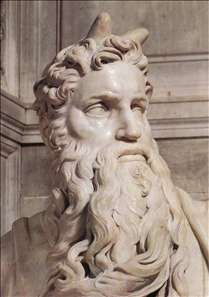
That’s where I left it, but I shared my conclusions with my friend Heidi and she discovered more when she was studying Egypt with her family. Heidi determined that Hatshepsut must have been the pharaoh’s daughter who adopted Moses, and that Thutmoses III was the pharaoh of the Exodus. I’m sure she’s right, and here’s why:

Hatshepsut—a.k.a. “His Majesty herself”—is known as the female pharaoh who locked her young stepson away with the priests while she (who was supposed to rule as his regent) seized power and ruled for 21 years. I hadn’t thought about it before, but it would take a woman with such chutzpah to adopt a Hebrew baby at a time when Egypt was killing all the Hebrew boys. Hatshepsut never had a biological son (only two daughters), but she named her adopted son Moses after her father, mighty Thutmoses I. It makes perfect sense that she was preparing Moses to rule next.

But then Moses left (to Midian). A short time later Thutmoses II (successor to Thutmoses I and husband of Hatshepsut) died. That left Thutmoses III—son of a harem wife and practically a commoner himself—as Pharaoh. Hatshepsut’s young daughter married this half brother, and Hatshepsut was Dowager Queen and regent—for awhile. But she wanted more. Perhaps she was hoping and waiting for Moses’ return. In a bloodless coup d’etat, she seized all power and proclaimed herself Pharaoh of the Two Lands.

By the time Moses did return 40 years later, Hatshepsut was dead. Thutmoses III had been sole Pharaoh for many years and had created a huge empire: setting out every spring to quash rebellions and to conquer new lands. In spite of his might, however, he certainly felt threatened by Moses who was the true heir. Thutmoses III blustered and bullied to hide his insecurity. But it took the tenth plague—where his own firstborn son died and Thutmoses III didn’t—to prove he was an imposter and to shatter his pride. And then the Israelites were gone.

Thutmoses III had no more conquests following the Exodus; after 17 years of empire building, he stayed home. He had to, since his army was at the bottom of the Red Sea. He did, however, have a big temper tantrum and demolished all of the shrines and monuments which Hatshepsut had built. (Many of these had pictures of Hatshepsut with a little boy.) After a long reign, Thutmoses III was followed on the throne by Amenhotep II—his second son.

As great as it is to finally have all the pieces fit together, it’s even better to see how this strengthens Moses’ position as a type for Jesus Christ. I already knew that both were deliverers, both were lawgivers, etc. Both of them escaped death because of kings who killed baby boys. But add to that that both were adopted into royal lines where they should have ruled an earthly kingdom. Both of them had younger brothers who wanted (and tried) to rule in their place. It’s this testimonial to the life of Jesus Christ that is best of all. (And the fact that I can teach it right along with our history.)

Studying Egypt, 2009

I started this unit with things my children already knew about—pyramids and mummies. After about a week, we continued by using the book Pharoahs of Ancient Egypt (by Elizabeth Payne) as our outline. This book discusses some of the more prominent pharaohs and the archeological discoveries related to them. I added a few other things—trade routes in connection with Hatshepsut, Egyptian religion in connection with Akhenaton, Biblical Joseph during the Hyksos’ reign, etc.

One of our books for this unit was The Curse of the Pharoahs by Zahi Hawass (Egypt’s current Director of Antiquities). Hawass has an engaging, instructive style. After reading his book, we started noticing Dr. Hawass everywhere—in our DVDs (not always named, but we recognized his face) and mentioned in other books. Then I started to wonder… it seems that this man has a lot of energy…and ego. One book I read talked about how American researchers were “kicked out” of Egypt because Zahi Hawass didn’t like what they were learning about the Sphinx! I’ve decided this is one of those cases where we learn more than we planned on: not only about Egypt, but about the “politics” of archeology.

Along those same lines, Motel of the Mysteries by David McCauley is a must-read so that you learn not to believe everything the archeologists might say.

I really enjoyed a DVD we happened to find about Nefertiti, wife of Akhenaten (Nefertiti Resurrected). Archeologist Dr. Joann Fletcher believes that a damaged mummy—found in the Valley of the Kings—may be Queen Nefertiti. There is evidence that this woman died from a stab wound, which is consistent with the fact that Nefertiti had enemies in high places. There is also evidence (from the positions of her mummy’s arms) that this woman ruled as pharaoh! Fletcher has theorized that Nefertiti was renamed Smenkhkare, the pharaoh who was Akhenaten’s co-regent and who ruled for three years after Akhenaten’s death. The evidence is compelling!

Another excellent DVD was Discovering Egypt (Video Visits series). The feature title shows mostly modern-day Egypt, but the “Cities of Ancient Egypt” option has computer imaging that turns the ruins into what they may have looked like anciently.


Finally, my favorite part of this block was our foray into archeoastronomy. Robert Bauval has written a series of books about the ancient Egyptians and how their immense knowledge of astronomy guided their building of pyramids and temples. This is FASCINATING! I no longer accept the premise that those pyramids were just a bunch of tombs.

Now I want to visit the land of the Nile :)

Mesopotamia Unit, 2009

This was a challenging unit to put together. All of the books at the library had pretty much the same information, and none of it was very inspiring (or very high-level). Besides the Epic of Gilgamesh, the only literature I could find to read aloud was a short story about the Tower of Babel that I had cut out of Omni magazine ages ago! (It wasn’t totally relevant, but provoked lots of good discussion!)

Finally there was the question of the “whole to parts” approach. What does that look like for ancient history? I decided to begin this unit from an archeologist’s point of view—considering clues to the culture then adding each subsequent discovery to see the big picture. We didn’t study the religion, daily life, education, government, and other aspects of the culture separately, but considered them as we moved along the chronological history of the area. I specifically didn’t include much about Biblical history—except when it intersected that of Sumer, Babylon, and Assyria—because we are already familiar with those stories.

Following are my weekly plans. Throughout the unit each of the kids worked on a flapbook to record what he had studied. And one final note: the Spirit told me I needed to talk about Babylon in the scriptural sense (worldliness), not just in the historical sense. So we spent several days just on that.

Week 1
*Archeologists found one civilization on top of another in the Fertile Crescent.
Trace the clues to the existence of Sumer (ancient stories, clay tablets…).
Learn about discoveries and prominent archeologists (Wolley, Koldeway, Windler, Laird).
Standard of Ur—what are the pictures showing?
Other artifacts: clothing / tools / jewelry / sundials…
Try writing with a stylus in wet clay!
Vocabulary: ziggurat, cuneiform, tel
Tower of Babel
Read aloud “Tower of Babylon” by Ted Chiang (fun!)
Ziggurats related to astronomy and time-keeping

*Mesopotamia is called the “Cradle of Civilization.”
What makes a civilization?
Look at geography of the region
--Make a map of physical places and early cities.
Vocabulary: alluvial, delta, meso-potam-ia (related to the word hippopotamus!)
Babylonia = Shinar (Gen 10:10)—lower end of Tigris & Euphrates valley / city: Babylon
Assyria = Asshur—Tigris valley north of Babylonia / city: Ninevah
Sumer, Akkad, Ur

Week 2
*The Epic of Gilgamesh is Sumerian literature.
Read aloud. (It took about three days.)

*The Sumerians have many gods.
Identify diety—relationships, what they stood for, Sumerian vs.Babylonian names
Vocabulary: polytheism

Week 3
*City-states become empires
Mesopotamian government
Organization of society
Sargon of Akkad—first “empire”
Ur-Nammu—Third Dynasty of Ur
Hammurabi of Babylonia —written laws (Hammurabi’s Code)
Vocabulary: city-state

*Many nations, in turn, control the Fertile Crescent
Assyria (Senacherib), Babylon (Nebuchadnezzar), Persia (Darius)
Add to timeline.
Memorize poem “The Destruction of Sennacherib” by Lord Byron

Week 4
*Babylon has everything the World can offer.
city walls / Euphrates River / Ishtar Gate ….
Seven Wonders of the World—Hanging Gardens
Make watercolor paintings of the hanging gardens

*”Babylon” is the Lord’s symbol for worldliness.
actual city
Rome (Revelation / I Peter 5:13)
The World (D&C 1:16, 35:11, 64:24, 86:3, 133:14)
Sing “Ye Elders of Israel"

Timelines for Ancient History

How do you have your students make timelines when even the experts can’t decide on dates?

Over the years I have compiled my own list of people and events. I started with the Bible (beginning 4000 B.C.) and all the ages of the patriarchs. (That covers an amazing number of years!) From that, I got an approximate date for the Flood (2340 B.C.).

Here’s where things get tricky. The experts think that Mesopotamian culture got going around 3500 B.C. But mud bricks would never have made it through the Flood, so Sumer had to have started after 2340. Remember, though, that Noah’s family didn’t have to start their civilization from nothing. They were already accomplished artisans (they built an ark!), so they had a better head start than the experts suppose.

The Book of Mormon tells us that the Tower of Babel was in 2243 B.C.—a mere 100 years after the Flood. Many archeologists think it was part of Nebuchadnezzar’s great city, but I think that he probably just restored what was left of the original tower.

Egypt is another puzzle. Experts’ dates for the Old Kingdom are all before the Flood. (One book I read, however, indicated that Dynasties One through Three may have been mythological.) Could the pyramids have made it through the Flood? I’m pretty sure there would have been some evidence of water damage to them—so I’m betting that the whole thing started with Ham’s descendents. The Sphinx, however, does have water erosion! It must be much older, and has had the head re-carved several times (which is why it looks out of proportion).

Another Egypt question is the date that Moses led the Israelites out of bondage. I grew up watching The Ten Commandments and thinking it was Ramses that wouldn’t let them go. But the New Testament (Galatians 3:17) indicates that the Exodus was 430 years from the time of the Lord’s covenant with Abraham. That puts it about 1490--the 18th dynasty. (Ramses is the 19th.) I should add that the writers of the LDS Bible Dictionary don't agree with me, and put the Exodus during the reign of Pharoah Manephtah, almost 200 years later and 430 years after Joseph went to Egypt. I'm sticking with my dates though, because I think they make more sense!

My timeline is still being modified slightly, as I read and learn more. I'm sure it's not totally correct, but generally it has worked out well and given us a good idea of how things fit together.